Aug 31, 2026Technical Guides
How to Choose the Right Pressure Range for a Pressure Transmitter
Learn how to select a pressure transmitter range based on actual operating pressure, pressure excursions, overpressure conditions and measurement requirements.
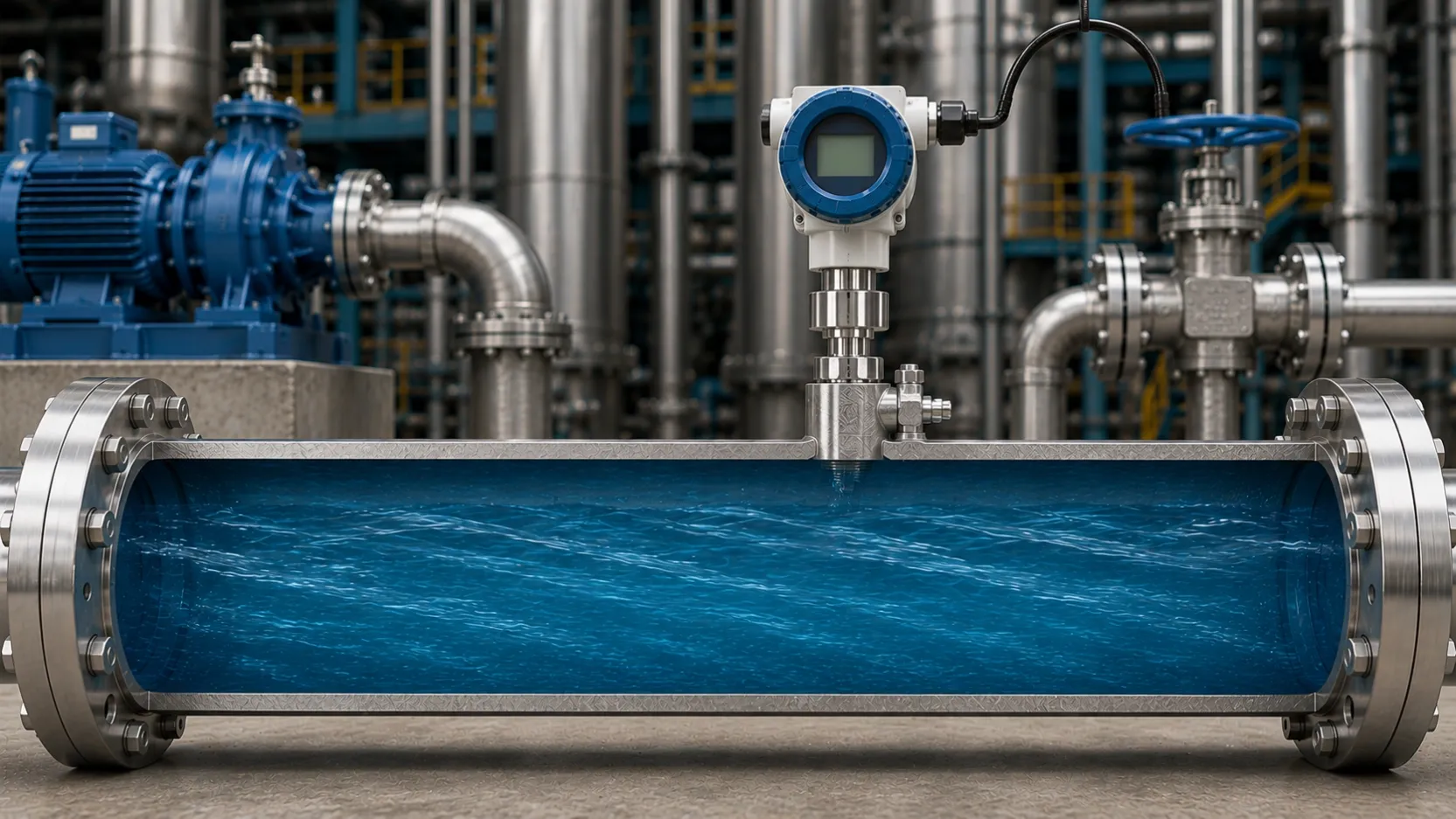
Choosing a pressure transmitter range is not simply a matter of selecting the next available value above the normal operating pressure.
A process may operate steadily most of the time but experience higher pressures during startup, shutdown, pump operation or valve movement. Some of these pressures may need to be measured accurately. Others may only need to be safely withstood by the instrument.
A more useful starting question is:
What pressure must the transmitter measure, and what pressure does it only need to withstand?
This distinction helps separate the measuring-range decision from the overpressure assessment.
1. Start with the Pressure Profile, Not a Catalog Range
The normal operating pressure is only one part of the application.
Before selecting a transmitter range, establish the actual pressure profile of the process, including:
- normal operating pressure;
- minimum and maximum expected pressure;
- startup and shutdown conditions;
- pressure changes caused by pumps, valves or load variation;
- pulsation or short pressure spikes;
- foreseeable abnormal conditions.
A system that normally operates at a stable pressure may briefly experience a much higher pressure during a dynamic event. Whether that higher pressure belongs inside the measuring range depends on what the process actually needs to measure.
2. Which Pressure Must Actually Be Measured?
Consider two different cases.
The higher pressure is part of the measurement
If the process regularly reaches a higher pressure and that value is important for control, monitoring or protection, the measuring range should cover it.
The measurement system must also be able to respond appropriately to the process dynamics.
The higher pressure is only an excursion
A pressure spike may occur during valve operation, pump startup or another transient condition, but the process may not require accurate measurement at that peak.
In this case, increasing the measuring range is not automatically the only solution. The transmitter's overpressure capability must also be checked.
The key distinction is:
A pressure that must be measured belongs in the measuring-range decision. A pressure that only needs to be survived belongs in the overpressure assessment.
3. Measuring Range and Overpressure Capability Are Different
The measuring range defines the pressure interval in which the transmitter is intended to perform its measurement function according to its specified performance.
The overpressure capability defines how much pressure above the normal measuring range the instrument can withstand under specified conditions.
These are different specifications.
A transmitter may be able to survive pressure above its upper measuring limit without being intended to measure accurately at that pressure.
Overpressure capability must therefore be verified separately for the actual transmitter configuration.
At still higher pressure, the concern may eventually shift from measurement performance to permanent deformation, leakage or structural failure. That is a different boundary from normal measuring range and should not be used as routine selection margin.
4. Why a Larger Range Is Not Automatically Safer
Selecting a wider range may provide additional room for higher process pressure, but simply increasing the range does not solve every problem.
A larger range may still leave unresolved questions such as:
- whether pressure spikes exceed the instrument's allowable overpressure;
- whether transient pressure should be measured or merely survived;
- whether the selected span provides suitable measurement performance;
- whether the real pressure problem is caused by the process rather than by the transmitter range.
This is why pressure range should be selected from the actual process profile rather than from a general rule such as “choose a much larger range for safety.”
5. Check How Measurement Performance Is Specified
When comparing different ranges, do not look only at a percentage such as “±0.5%”.
First check what that percentage actually refers to.
Depending on the transmitter, measurement performance may be expressed using terms such as:
- percentage of full scale;
- percentage of calibrated span;
- percentage of reading;
- reference accuracy;
- combined performance specifications.
For example, if a specification is explicitly defined as ±0.5% of full scale, then:
Range | ±0.5% FS corresponds to |
|---|---|
0–2 MPa | ±0.01 MPa |
0–10 MPa | ±0.05 MPa |
This is only a mathematical example.
It does not mean that all transmitters use ±0.5% FS, and it does not mean that widening the nominal range always causes the total measurement error to increase in the same proportion.
The correct approach is to check the manufacturer's actual performance definition at the selected or configured range.
6. How Should Pressure Spikes Be Considered?
Short pressure spikes can occur during events such as rapid valve movement, pump startup or sudden process changes.
The first question is whether the spike needs to be measured.
If it does, then the measuring range and the dynamic response of the measurement system must be considered.
If it does not, the focus shifts toward whether the transmitter can withstand the event.
Repeated or severe pressure transients may also indicate a process or installation issue. In those cases, simply selecting a larger transmitter range may not address the underlying cause.
For basic range selection, the important point is:
Pressure spikes should be identified before the measuring range is finalized.
Detailed transient-pressure failure mechanisms and protection methods belong to a separate troubleshooting topic.
7. Configurable Range, Span and Turndown
For some configurable process transmitters, the sensing element has a defined measurement capability while the output is configured for a smaller operating span.
In this case:
Span = Upper Range Value (URV) − Lower Range Value (LRV)
This means the sensor capability and the configured span are not always the same thing.
Terms such as rangedown or turndown describe how far the transmitter can be configured within its permitted limits.
However, a high turndown ratio should not be interpreted to mean that all performance characteristics remain unchanged at every configured span.
When a transmitter is configured significantly below its basic sensor range, verify the performance specification for that actual configuration.
8. A Practical Pressure-Range Selection Workflow
A useful sequence is:
1. Define the measurement task
What process variable must actually be measured?
2. Establish the normal pressure profile
Identify normal, minimum and maximum operating pressure.
3. Identify dynamic conditions
Check startup, shutdown, valve operation, pump operation and other pressure changes.
4. Separate measurement pressure from survivable pressure
Which pressures must be measured accurately, and which only need to be withstood?
5. Select the measuring range
Choose a range that covers the pressure that actually needs to be measured.
6. Verify overpressure capability
Confirm that foreseeable excursions remain within the transmitter's allowable limits.
7. Check measurement performance
Review how accuracy or performance is specified for the selected range or configured span.
8. Check rangedown or turndown where applicable
For configurable transmitters, verify the actual configured-span performance.
9. Complete the rest of the application selection
Pressure reference, process medium, temperature, connection, output and installation conditions still need to be confirmed.
9. What Information Should You Provide Before Ordering?
A useful pressure-transmitter inquiry should include more than:
“I need a 10 MPa transmitter.”
Where possible, provide:
- normal operating pressure;
- expected minimum and maximum pressure;
- known transient or peak pressure;
- whether the peak must be measured or only survived;
- gauge, absolute or differential pressure reference;
- process medium;
- process and ambient temperature;
- process connection;
- required electrical output or communication.
This information allows the transmitter range to be selected from the real operating conditions rather than from a nominal pressure value alone.
For the pressure-reference decision, see Gauge vs. Absolute vs. Differential Pressure: How to Choose the Right Reference.
For the broader transmitter-selection workflow, see How to Select a Pressure Transmitter: A Practical Application Guide.
Conclusion
The right pressure range is not simply the next available catalog value above normal operating pressure.
Start with the actual pressure profile.
Identify what pressure must be measured, what pressure may occur only temporarily, and what the transmitter must safely withstand.
Then evaluate measuring range, overpressure capability and measurement performance separately.
That produces a more defensible transmitter selection than choosing range from nominal pressure alone.
For applications requiring a field-mounted industrial pressure transmitter, see HRT-P2088 Industrial Pressure Transmitter. The required pressure range and configuration can be reviewed against the actual operating profile before quotation.