Sep 1, 2026Technical Guides
Level Measurement in Industrial Processes: Principles, Applications and Selection
Learn how level measurement supports storage, transfer and process control, how measurement principles differ, and what to confirm before selecting a level instrument.
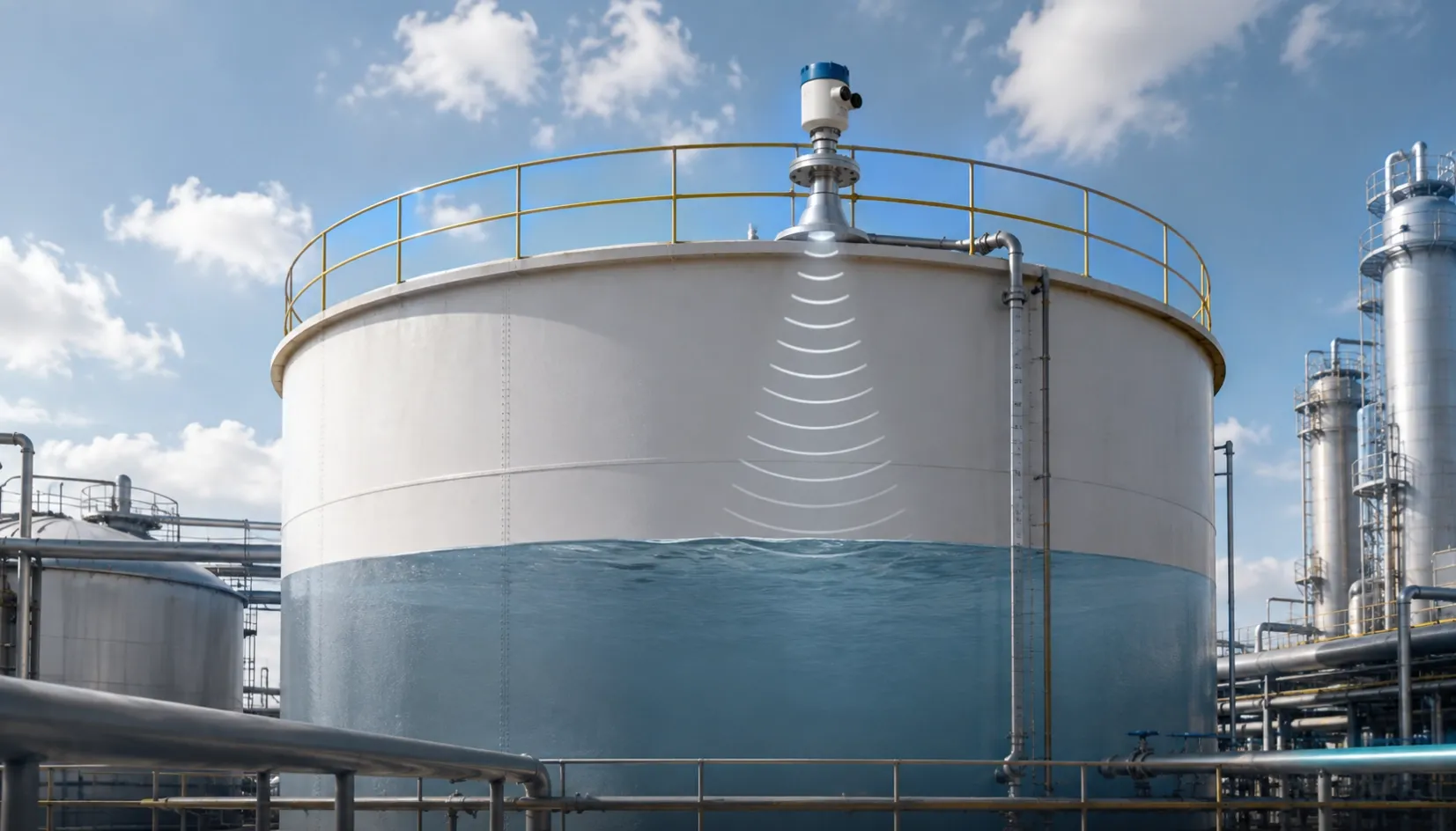
A level measurement becomes useful when it helps answer a specific storage, transfer or process question.
How much material is available? Is a tank filling or emptying as expected? Is a vessel approaching an operating limit? Should a pump start or stop? Has the level changed unexpectedly?
The measurement task should therefore be defined before the measurement technology is selected.
A useful level measurement depends not only on the instrument, but also on the material, vessel geometry, reference point, operating conditions, installation and the way the resulting signal will be used.
What should the level measurement tell you?
Different level measurements support different operational decisions.
Typical tasks include:
• monitoring material stored in tanks or vessels;
• coordinating filling and emptying operations;
• supporting pump or valve control;
• detecting high- or low-level conditions;
• maintaining material availability between process stages;
• monitoring water, wastewater, wells or reservoirs;
• recording storage or transfer conditions;
• identifying unexpected changes that require investigation.
The same vessel may require different measurement arrangements depending on the task.
For example, continuous level measurement, point-level detection and an independent high-level protection function do not necessarily serve the same purpose. Before selecting an instrument, define whether the requirement is indication, continuous measurement, control input, alarm, inventory monitoring or an independent protective function.
Level is not just a number
Level can be expressed as distance, height, percentage or calculated volume, but these values are not automatically interchangeable.
A distance from the sensor to the material surface is not the same as material height until the installation reference and vessel dimensions are defined.
Material height is not automatically volume. Converting level to volume requires information about vessel geometry or an appropriate vessel calibration relationship.
Hydrostatic pressure is not automatically liquid level. The relationship depends on liquid density, gravity, pressure reference and the measurement arrangement.
For a closer look at gauge, absolute and differential pressure references, see Gauge vs. Absolute vs. Differential Pressure: How to Choose the Right Reference.
This distinction becomes important when the measured value is transferred to a PLC, DCS, remote monitoring platform or inventory system. An instrument may produce a stable signal while the displayed level is still incorrect because the reference height, scaling, density assumption or vessel geometry has been defined incorrectly.
Where level measurement is used
Storage tanks
Level measurement can show how much usable material remains, whether filling or emptying is proceeding as expected and whether the vessel is approaching a defined operating limit.
The required measurement method depends on the stored material, tank geometry, pressure, temperature, vapour conditions, internals and the required measurement function.
Process and buffer vessels
Level can help coordinate processes that operate at different rates.
A buffer vessel, for example, can absorb short-term differences between upstream and downstream flow. Its level provides information about whether material is accumulating or being drawn down.
The measurement should be interpreted together with the process design rather than treated as an isolated inventory value.
Water and wastewater systems
Level measurement is widely used in water tanks, wells, sumps, reservoirs and wastewater systems.
Depending on the application, the measurement may support pump control, storage monitoring, drainage management, overflow awareness or operating records.
The required update rate and measurement arrangement can differ substantially between a slowly changing reservoir and a rapidly changing pump sump.
Transfer and pumping systems
During filling, emptying or material transfer, level data can help confirm whether the receiving or source vessel is changing as expected.
Unexpected level behaviour may indicate a process condition that requires investigation, but level alone does not establish the cause. Flow, valve position, pump state or other process variables may also need to be reviewed.
Different measurement principles solve the problem differently
No single level measurement principle is suitable for every vessel and material.
The technology should be selected after the measurement task and operating conditions are understood.
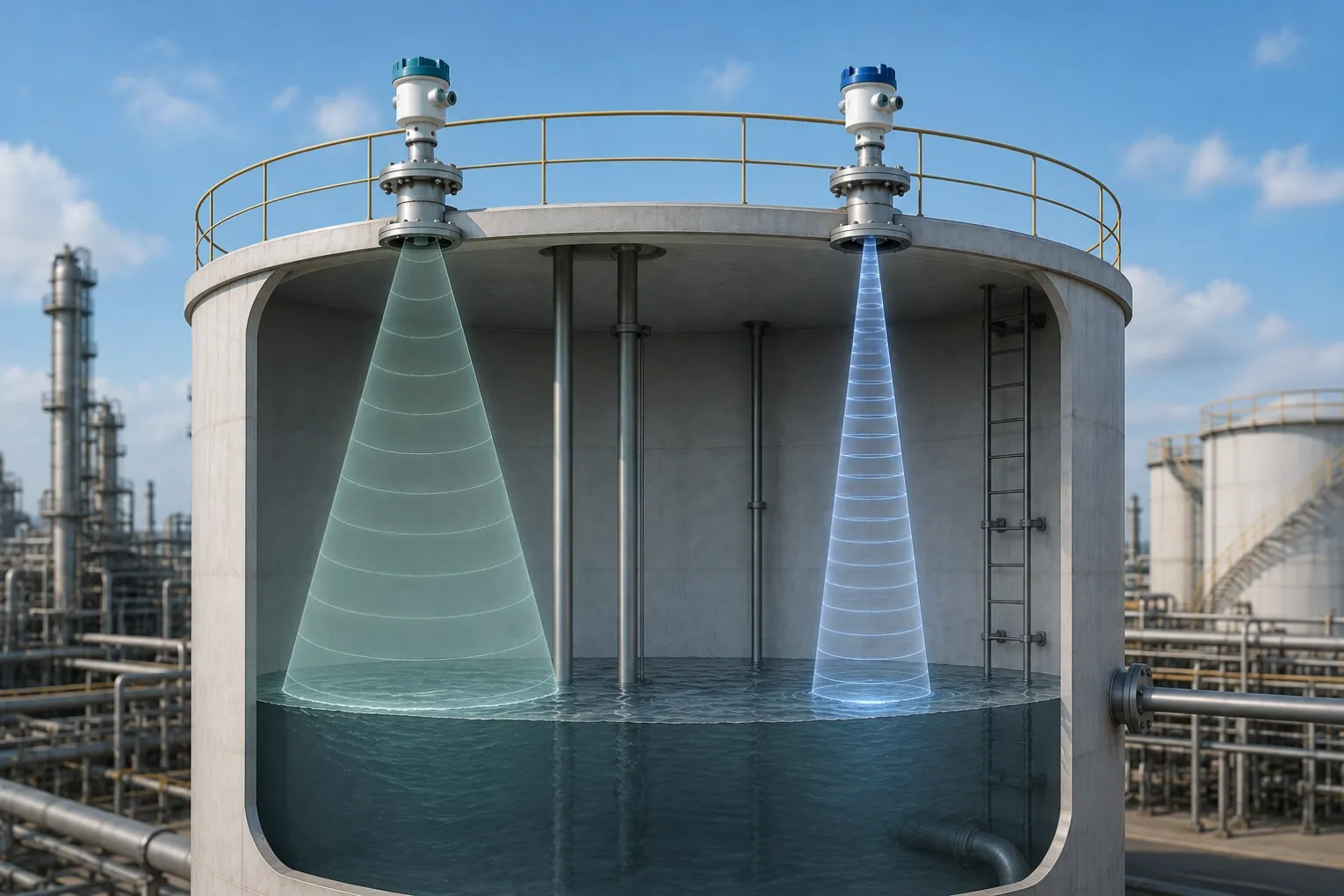
Radar level measurement
Radar instruments determine distance by transmitting electromagnetic energy toward the material surface and analysing the returned signal.
Non-contact radar can be useful when avoiding direct contact with the medium is desirable and the vessel provides a suitable measurement path.
Performance still depends on the actual application. Vessel internals, nozzle geometry, weak reflections, foam, condensation, buildup, agitation and mounting position can affect the measurement.
Higher-frequency radar can provide a narrower beam, which may be useful in vessels with restricted installation geometry, but frequency alone does not determine whether an instrument is suitable.
Commissioning should confirm the reference dimensions, mounting arrangement, echo behaviour and response at known process conditions.
Hydrostatic level measurement
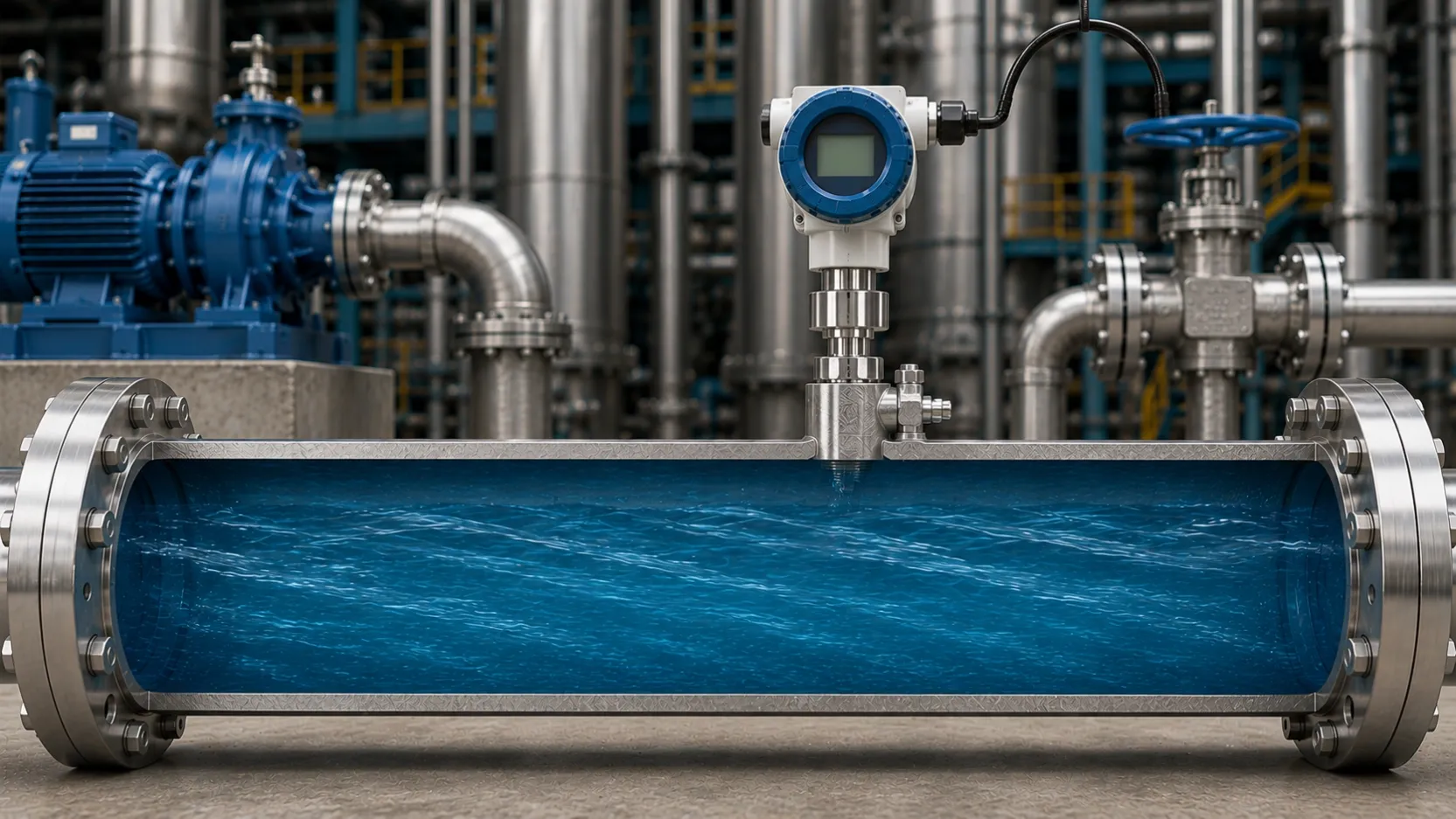
Hydrostatic measurement uses the pressure produced by a liquid column to determine liquid height.
A submersible level transmitter or a pressure measurement point near the bottom of a vessel can provide a continuous level signal when the relationship between pressure and liquid height is properly defined.
The method depends on liquid density and pressure reference.
Density changes, deposits, venting conditions, installation depth and the condition of the immersed sensor or cable can influence the result.
Ultrasonic level measurement
Ultrasonic instruments determine distance using acoustic signals reflected from the material surface.
They can provide non-contact measurement in suitable applications, but vapour, temperature gradients, foam, turbulence, obstructions and installation geometry may influence signal propagation and reflection.
The choice between ultrasonic and radar should therefore be based on the actual vessel and process conditions rather than on non-contact measurement alone.
For a more detailed comparison of these two non-contact technologies, see 80 GHz Radar and Ultrasonic Level Measurement.
Capacitance and other contact methods
Capacitance measurement detects changes in the electrical relationship between the probe, the material and the vessel or reference electrode.
Float, conductive and other contact principles can also provide useful level or point-level information.
Their suitability depends on material properties, buildup, mechanical conditions, required function and maintenance requirements.
What can make a level reading unreliable?
A level instrument should not be evaluated only by its catalogue accuracy.
The complete measurement arrangement can introduce errors or misleading values.
Important factors include:
• incorrect reference height or zero point;
• incorrect vessel dimensions or scaling;
• changes in liquid density;
• foam or turbulent surfaces;
• condensation or buildup;
• vessel internals or obstructions;
• unsuitable nozzle or mounting position;
• false radar or ultrasonic echoes;
• pressure or temperature changes;
• deposits around an immersed sensor;
• incorrect wiring or control-system scaling;
• unsuitable update rate;
• incomplete commissioning.
Connected monitoring does not remove these problems.
A remote dashboard can display an incorrect value very efficiently if the measurement reference or configuration is wrong.
Before level data is used for control, alarms, inventory or remote decisions, the complete measurement chain should be checked against known conditions.
How to select a level measurement method
A practical selection process starts with the application rather than with a technology name.
1.Define the measurement task
Determine whether the requirement is:
• continuous level measurement;
• local indication;
• point-level detection;
• pump or valve control;
• high- or low-level alarm;
• inventory monitoring;
• remote monitoring;
• process records;
• another defined measurement function.
2.Confirm the material
Identify whether the medium is a liquid, slurry, powder or another material.
Review properties that may affect the measurement, including density, dielectric behaviour, conductivity, viscosity, solids, corrosion, buildup and other relevant process characteristics.
3.Understand the vessel
Confirm:
• vessel height and shape;
• installation reference;
• nozzle dimensions;
• internal structures;
• agitators or other obstructions;
• access for installation and maintenance.
Level measurement depends on the relationship between the instrument and the vessel, not on the instrument alone.
4.Define the complete operating conditions
Review normal and abnormal conditions, including:
• minimum and maximum level;
• filling and emptying behaviour;
• process pressure;
• process and ambient temperature;
• vapour;
• foam;
• condensation;
• agitation;
• buildup;
• possible flooding or submersion of the installation area.
5.Select the measurement principle
Only after the application is defined should radar, hydrostatic, ultrasonic, capacitance or another measurement principle be compared.
The objective is not to select the most advanced technology. It is to select a measurement arrangement that can provide useful and verifiable information under the actual operating conditions.
6.Confirm installation and integration
Review the mounting position, process connection, power, output, communication, cable arrangement, enclosure requirements and access for commissioning or maintenance.
Where hazardous-area or other certification requirements apply, suitability must be confirmed for the exact product and configuration.
7.Plan commissioning and verification
A level measurement should be checked against known conditions before it is trusted.
Depending on the technology, commissioning may include:
• reference-height verification;
• zero and span confirmation;
• vessel scaling;
• echo review;
• density settings;
• output scaling;
• alarm checks;
• response at known levels;
• communication and control-system verification.
Periodic inspection or verification should reflect the application, measurement importance and site procedures.
Choosing between radar and hydrostatic measurement
Radar and hydrostatic measurement can both provide continuous liquid-level information, but they measure different physical quantities.
Radar measures distance to the material surface.
Hydrostatic measurement measures pressure produced by the liquid column and uses that relationship to determine level.
Radar may be useful where non-contact measurement is preferred and suitable reflections can be obtained.
Hydrostatic measurement can provide a practical solution where an immersed or bottom-mounted pressure measurement is appropriate and liquid density is sufficiently understood.
Neither method should be selected from nominal range alone.
The vessel, medium, pressure, temperature, mounting, required accuracy, maintenance conditions and measurement purpose should determine the choice.
Next step
A useful level measurement starts with the measurement task and actual operating conditions.
Define:
what needs to be measured → what material is in the vessel → what the vessel geometry and reference points are → what operating conditions affect the measurement → which measurement principle is suitable → how the instrument will be installed → how the signal will be used → how the result will be verified.
For non-contact level applications, an HRT radar level configuration can be reviewed against the vessel, medium and operating conditions.
For submerged or hydrostatic level measurement, an HRT hydrostatic level configuration can be reviewed against liquid density, pressure reference, installation depth and environmental conditions.
Final suitability should be confirmed for the selected product, configuration and actual operating conditions.