Aug 30, 2026Technical Guides
Gauge vs. Absolute vs. Differential Pressure: How to Choose the Right Reference
Learn how gauge, absolute and differential pressure use different reference points, where each is applied, and how to choose the right reference for your process.
Direct Answer
Gauge, absolute and differential pressure are distinguished by their reference point.
- Gauge pressure is referenced to local atmospheric pressure.
- Absolute pressure is referenced to vacuum.
- Differential pressure compares the pressure at two points.
The right choice therefore depends on a simple question:
What should the process pressure be compared with?
This decision should normally be made before finalizing the measuring range, process connection, output signal or other transmitter configuration.
1. What Defines a Pressure Reference?
A pressure value is not fully defined by a number and unit alone.
For example, a specification of 5 bar does not tell us whether the pressure is measured relative to atmosphere, vacuum, or another process pressure.
For gauge and absolute pressure:
Pabs = Pg + Patm
where:
- Pabs = absolute pressure
- Pg = gauge pressure
- Patm = atmospheric pressure
For differential pressure:
ΔP = P1 − P2
The equations are simple. The more important engineering question is deciding which reference correctly represents the process condition being measured.
2. Gauge Pressure: When Atmosphere Is the Useful Reference
Gauge pressure compares process pressure with the surrounding atmospheric pressure.
It is useful when the actual process question is:
How much higher or lower is this pressure than the surrounding atmosphere?
Many common industrial pressure measurements follow this logic, including pressure monitoring in pipelines, pumps, pneumatic equipment and other processes operating relative to ambient conditions.
In a vented gauge-pressure measurement, atmospheric pressure acts as the reference. When the process side and reference side are exposed to the same atmospheric pressure, the gauge reading approaches zero.
This does not mean gauge pressure is inherently preferable to other pressure types.
It simply means that atmosphere is the appropriate reference for that measurement task.
3. Absolute Pressure: When Atmosphere Should Not Define Zero
Absolute pressure uses vacuum as its reference.
The practical question is:
Does the process need pressure relative to vacuum rather than pressure relative to the surrounding atmosphere?
This distinction becomes important in vacuum-related processes and other applications where atmospheric pressure should not define the measurement zero.
Because:
Pabs = Pg + Patm
gauge and absolute readings should not be treated as interchangeable.
Atmospheric pressure changes with factors such as elevation and environmental conditions. If an application requires absolute pressure, using gauge pressure as a substitute introduces atmospheric pressure into the measurement relationship.
This does not make absolute pressure inherently more accurate than gauge pressure.
The two pressure types simply answer different measurement questions.
4. Differential Pressure: When the Difference Is the Process Variable
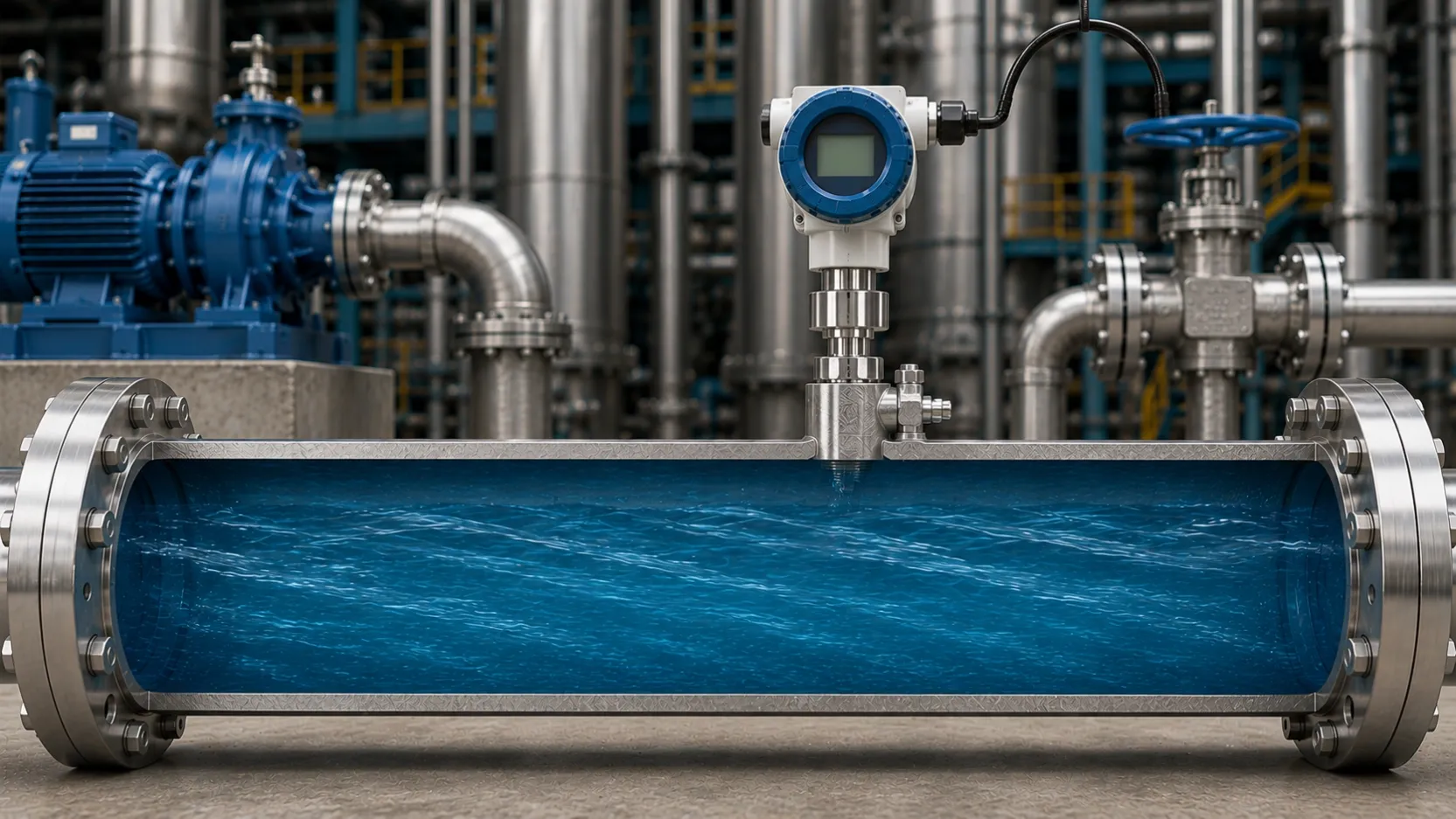
Differential pressure compares two process pressures:
ΔP = P1 − P2
Instead of asking what either pressure is relative to atmosphere or vacuum, the measurement asks:
What is the pressure difference between these two locations?
Differential pressure is therefore useful when the difference itself contains the process information.
5. Filter Monitoring
Consider a filter installed in a ventilation or process system.
Pressure exists upstream and downstream of the filter, but the useful process variable may be the pressure drop across the filter, rather than either pressure considered independently.
Differential pressure provides a direct way to monitor this relationship.
Changes in differential pressure can indicate changes in system resistance. However, differential pressure should still be interpreted together with operating conditions, flow conditions and the maintenance criteria of the actual system.
For applications involving small pressure differences, see Low-Pressure Measurement for Industrial Processes.
6. Differential Pressure in Flow Measurement
Differential pressure is also widely used as part of industrial flow measurement systems.
A defined restriction such as an orifice plate, Venturi tube or flow nozzle creates a pressure difference as fluid passes through the pipeline.
The differential-pressure instrument measures:
P1 − P2
The flow value is then derived using the relationship between differential pressure, the primary flow element and the relevant process conditions.
This distinction is important:
A DP transmitter measures differential pressure. Flow is derived from that measurement.
The complete measurement system therefore includes more than the transmitter alone.
7. Differential Pressure in Closed-Tank Level Measurement
Differential pressure can also be used for liquid-level measurement in a closed or pressurized vessel.
Pressure measured near the bottom of the vessel includes the hydrostatic contribution of the liquid column together with pressure acting above the liquid.
A second pressure reference can be taken from the upper part of the vessel.
By comparing the two sides, the common vessel pressure can be compensated so that the differential signal can be related to the hydrostatic pressure created by the liquid column.
The actual relationship still depends on factors such as:
- liquid density;
- process pressure;
- installation arrangement;
- impulse lines or remote-seal configuration where applicable;
- temperature and operating conditions.
For this reason, closed-tank DP level measurement should be evaluated as a complete measurement arrangement rather than as a simple pressure-range selection.
8. Open and Closed Tanks Show Why Reference Matters
An open tank provides a useful comparison.
The liquid surface is exposed to atmosphere. With a gauge-pressure measurement referenced to the same atmosphere, the atmospheric component is compensated, allowing the measurement to represent the hydrostatic pressure associated with the liquid column.
In a closed pressurized vessel, however, pressure above the liquid may also act on the lower measurement point.
That pressure cannot simply be ignored.
This is why two tanks with similar liquid heights can require different pressure-measurement arrangements.
The correct reference depends on the process configuration, not only on the expected pressure range.
9. What Happens When the Wrong Reference Is Selected?
A common pressure inquiry starts with:
“I need a 0–10 bar transmitter.”
But that does not completely define the measurement.
Is it:
- 0–10 bar gauge?
- 0–10 bar absolute?
- or a differential-pressure measurement between two process points?
An instrument can operate correctly while still providing the wrong variable for the process decision.
Gauge used where absolute pressure is required
Atmospheric pressure becomes part of the measurement relationship.
The instrument may be functioning normally, but the reference does not match the process requirement.
Absolute pressure used where gauge pressure is expected
The reading is referenced to vacuum rather than atmosphere.
It will therefore not behave like a conventional gauge-pressure reading.
Differential-pressure task treated as two unrelated pressures
If the actual process variable is the difference between two locations, treating P1 and P2 only as independent pressure values can obscure the real measurement task.
The issue is therefore not always instrument performance.
Sometimes the measurement itself has been defined incorrectly.
10. Practical Pressure-Reference Selection
Process question | Pressure reference to consider |
|---|---|
How much pressure is this line producing above ambient atmosphere? | Gauge pressure |
What is the pressure relative to vacuum? | Absolute pressure |
What is the pressure drop across a filter? | Differential pressure |
What is the pressure difference between two process points? | Differential pressure |
Does a vacuum-related process require a reference independent of atmosphere? | Absolute pressure |
What hydrostatic pressure exists in an open tank relative to atmosphere? | Commonly gauge pressure |
How can liquid head be separated from vessel pressure in a pressurized tank? | Differential pressure may be appropriate |
This table is a starting point.
The complete application still needs to be evaluated before an instrument is selected.
11. Common Pressure-Reference Mistakes
Specifying only the pressure range
0–10 bar is incomplete if the pressure reference is not defined.Treating gauge and absolute pressure as different units
The physical quantity is still pressure.
What changes is the reference condition.
The reference should therefore be stated explicitly in specifications and technical confirmations.
Using “vacuum” without defining the measurement convention
“Vacuum” alone may not completely describe the required measurement.
Clarify whether the application requires:
- absolute pressure;
- gauge pressure below atmospheric pressure;
- or another defined pressure reference.
Treating differential pressure as an ordinary single-point pressure
A DP application involves two pressure points.
P1, P2 and the required differential pressure all matter.
Selecting the transmitter before defining the measurement task
The measurement question should come first.
The transmitter configuration follows from it.
12. Pressure Reference Is Only the First Selection Decision
Choosing gauge, absolute or differential pressure does not complete transmitter selection.
The next step is to evaluate the actual operating conditions, including:
- normal operating pressure;
- minimum and maximum expected pressure;
- startup and shutdown conditions;
- vacuum conditions where applicable;
- pressure pulsation and transient events;
- foreseeable overpressure;
- process medium;
- wetted materials;
- process and ambient temperature;
- process connection;
- installation arrangement;
- output signal;
- power supply;
- control-system interface.
For differential-pressure applications, additional information may include:
- pressure at P1;
- pressure at P2;
- normal differential pressure;
- maximum differential pressure;
- static or line pressure;
- connection or impulse-line arrangement;
- the actual DP measurement task.
Pressure reference therefore belongs near the beginning of transmitter selection, not at the end.
13. What Should Be Confirmed Before Ordering?
Before selecting a pressure instrument, define the following information.
Measurement task
What process condition needs to be monitored or controlled?
Pressure reference
Gauge, absolute or differential?
Operating pressure
Normal, minimum and maximum conditions.
Dynamic conditions
Startup, shutdown, pulsation, pressure shock or other expected excursions.
Process medium
Gas, liquid or another medium, including relevant material-compatibility requirements.
Temperature
Process and ambient conditions where relevant.
Installation
Process connection, mounting and piping or tubing arrangement.
Electrical integration
Required output, power supply and control-system interface.
For differential-pressure applications, provide information for both pressure sides whenever possible.
This allows the measurement solution to be selected around the actual process, rather than around one isolated pressure-range value.
14. Start with One Question
When gauge, absolute and differential pressure seem confusing, start with one question:
What should this pressure be compared with?
If the answer is the surrounding atmosphere, gauge pressure may be appropriate.
If the answer is vacuum, absolute pressure may be appropriate.
If the answer is another process pressure, differential pressure may be appropriate.
Once the reference is defined, range, materials, connection, output and installation can be evaluated as part of the complete pressure-transmitter selection process.
For a broader selection workflow, see How to Select a Pressure Transmitter: A Practical Application Guide.