Aug 11, 2026Application Notes
Real-Time Downhole Data for Operational Monitoring
How surface-read downhole pressure and temperature data can support operational monitoring, and what to verify before selecting a telemetry system.
Direct answer
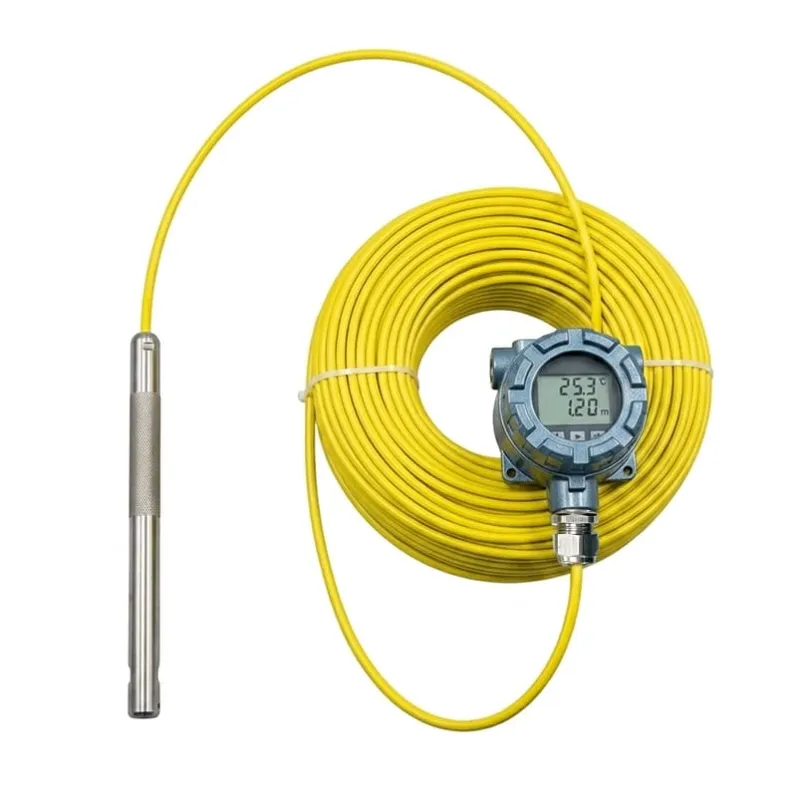
A surface-read downhole monitoring system transmits pressure, temperature or other available measurements while the tool remains installed. This can reduce the delay associated with retrieving and downloading a memory gauge, but it does not guarantee a specific operational outcome. The value depends on the measurement task, telemetry method, installation, data quality and the decisions the site is prepared to make from the data.
Memory gauges and surface-read systems
A memory gauge records data internally for retrieval later. It can be appropriate when continuous surface access is unnecessary or unavailable. A surface-read system sends data through a cable or another supported telemetry path to surface equipment, allowing operators to review measurements during the monitoring period.
The choice is not simply “delayed” versus “instant.” Consider deployment duration, sampling needs, retrieval access, cable routing, well configuration, power, data storage and the required response to changing conditions.
Define the monitoring objective
Clarify whether the data will support pressure-buildup observation, drawdown monitoring, production adjustment, equipment diagnostics, test interpretation or another task. Define required parameters, range, uncertainty, sample interval, duration and surface interface.
Do not select a system from a general “real-time” claim alone. End-to-end latency includes sensing, sampling, transmission, processing, display and operator response.
Review the well and installation
Provide:
- expected pressure and temperature conditions;
- well depth and completion arrangement;
- measured medium and potential corrosive components;
- deployment duration and retrieval method;
- cable, feedthrough and surface-equipment requirements;
- power and communication interfaces;
- mechanical shock, vibration and handling conditions;
- required data logging, display and export;
- applicable site procedures and certifications.
Pressure limit, temperature limit, materials and cable construction must be verified for the exact system configuration. Do not apply values from another gauge or general product-family description.
Data quality and interpretation
Continuous data can reveal trends, transients and changes that a low-frequency or post-retrieval workflow may not show at the same time. However, useful interpretation still requires correct range selection, calibration, installation, time synchronization and knowledge of operating events.
Unexpected readings should be checked against surface conditions, equipment status, wiring, scaling and reference data. A changing signal is not automatically evidence of reservoir behavior or instrument failure.
Integration and commissioning
Confirm the surface unit, signal interface, units, scaling, sampling, storage and alarm functions. Verify cable and connector assembly, pressure integrity and mechanical installation according to the approved design.
Before deployment, check the gauge response and record configuration. After installation, compare initial readings with available reference information and confirm time alignment with surface operating records.
Practical questions
Does surface-read monitoring replace memory gauges?
Not in every application. Memory and surface-read systems support different deployment, access and data requirements. Select the method that fits the monitoring objective and well configuration.
Does real-time data automatically improve recovery or safety?
No. Data can support decisions, but outcomes also depend on interpretation, operating procedures, equipment and site controls.
Which materials are required for corrosive service?
Material selection depends on the actual medium, contaminants, temperature and exposure. Verify the complete wetted and structural construction for the selected configuration.
What should be documented?
Retain the approved model and configuration, calibration information, deployment conditions, sampling settings, units, time reference and any changes made during operation.
Next step
Prepare the well conditions, required measurements, deployment arrangement and surface-interface requirements. HRT can review available downhole gauge and telemetry configurations; final suitability must be confirmed for the selected system and site procedure.