Aug 13, 2026Application Notes
Real-Time Downhole Telemetry for Reservoir Monitoring
An overview of downhole telemetry architecture, data timing, integration and limitations for pressure and temperature monitoring.
Direct answer
Downhole telemetry transfers measurements from an installed tool to surface equipment through a supported communication path. It can make pressure and temperature data available during the monitoring period, but data quality and usefulness depend on the sensor, sampling, telemetry, installation, surface system and interpretation.
System architecture
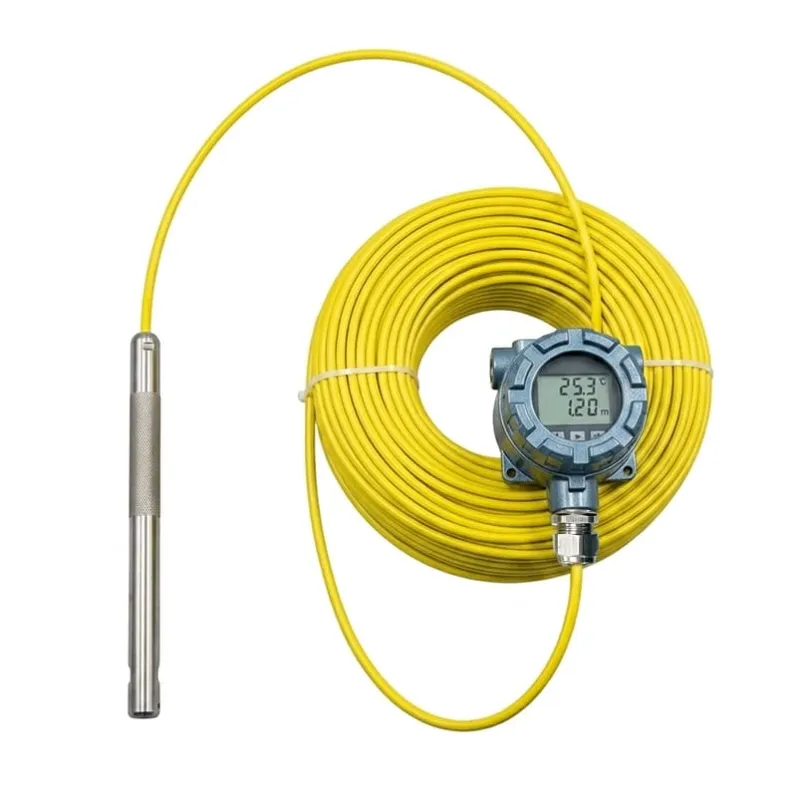
A telemetry system may include the downhole sensing element, electronics, cable or communication channel, feedthrough, surface interface, power, data logger and display or control-system connection. Each component has limits and failure modes.
Define the complete system rather than selecting a gauge independently from its cable and surface equipment.
Sampling, transmission and latency
Sampling interval determines when the downhole measurement is acquired. Transmission, processing and display add further delay. Define the maximum acceptable end-to-end latency from the operational objective.
“Real time” should not be used without stating the system behavior. Confirm update rate, buffering, time stamps, data loss handling and recovery after communication interruption.
Review downhole conditions
Provide pressure, temperature, depth, medium, corrosive components, shock, vibration and deployment duration. Verify the complete selected configuration against these conditions.
Material, pressure, temperature and depth statements must be model- and configuration-specific. Avoid assuming a cable, connector or feedthrough shares the same limit as the gauge.
Surface integration
Confirm power, isolation, grounding, data interface, units, scaling, logging and time synchronization. Define alarm or operating actions and how communication failure will be indicated.
If data is sent to a remote platform, address network availability, buffering, cybersecurity, access control and data retention according to site requirements.
Data interpretation
Downhole pressure and temperature trends may support understanding of well behavior when aligned with production, pumping and other operating data. They should not be interpreted without context.
Unexpected values may result from real process change, installation effects, scaling, communication, time alignment or instrument condition. Use cross-checks and operating records.
Commissioning
Before deployment, verify the model, range, response, telemetry, time, logging and surface interface. Inspect cables and connectors and record configuration.
After installation, confirm initial readings and data continuity. Test communication-failure indication and recovery where feasible.
Limitations
Telemetry does not guarantee continuous data under every condition. Cable damage, connector problems, power loss, surface equipment, network interruption or downhole conditions can affect availability.
The measurement does not by itself guarantee production optimization, reservoir recovery or well safety. Those outcomes require qualified interpretation and operational controls.
Practical questions
What is the difference from a memory gauge?
A memory gauge stores data for later retrieval; a telemetry system transfers data during the monitoring period. Compare deployment, access and data-timing needs.
How should update rate be selected?
Choose it from the dynamics of the event being monitored, storage, communication and decision requirements—not the maximum available setting.
What happens if communication is lost?
Behavior varies by system. Confirm local buffering, alarms, reconnection and data-recovery functions for the selected configuration.
Can telemetry data be connected directly to control logic?
Only after interface, units, scaling, time behavior, failure state and the safety of the control action are reviewed and tested.
Next step
Provide the monitoring objective, well conditions, sampling, latency, deployment and surface-interface requirements. HRT can review available telemetry configurations; final suitability must be confirmed for the complete system.