Aug 11, 2026Application Notes
In-Line Viscosity Control for Industrial Processes
How in-line viscosity data can support process adjustment, and what must be defined before using it in a control strategy.
Direct answer
In-line viscosity measurement can provide a continuous or periodic process indicator near the production line. It may support adjustment of temperature, formulation, mixing or another controlled variable when the measurement is representative and the relationship to product quality has been validated. The instrument alone does not guarantee consistency, energy savings or reduced waste.
Define the process objective
Identify why viscosity matters and which action can influence it. Possible objectives include maintaining coating behavior, mixing consistency, pumpability, atomization, filling behavior or a validated product characteristic.
Define the required value or control band, reference method, operating temperature, sampling and action. Avoid using an arbitrary viscosity target without confirming how it relates to the process and product.
Understand fluid behavior
Newtonian and non-Newtonian fluids respond differently to shear. Thixotropic, shear-thinning, shear-thickening or temperature-sensitive behavior can cause values to differ between laboratory and in-line conditions.
Document formulation, solids, bubbles, temperature, pressure, flow and mixing. Changes in raw materials or process history may require a new correlation.
Choose the measurement location
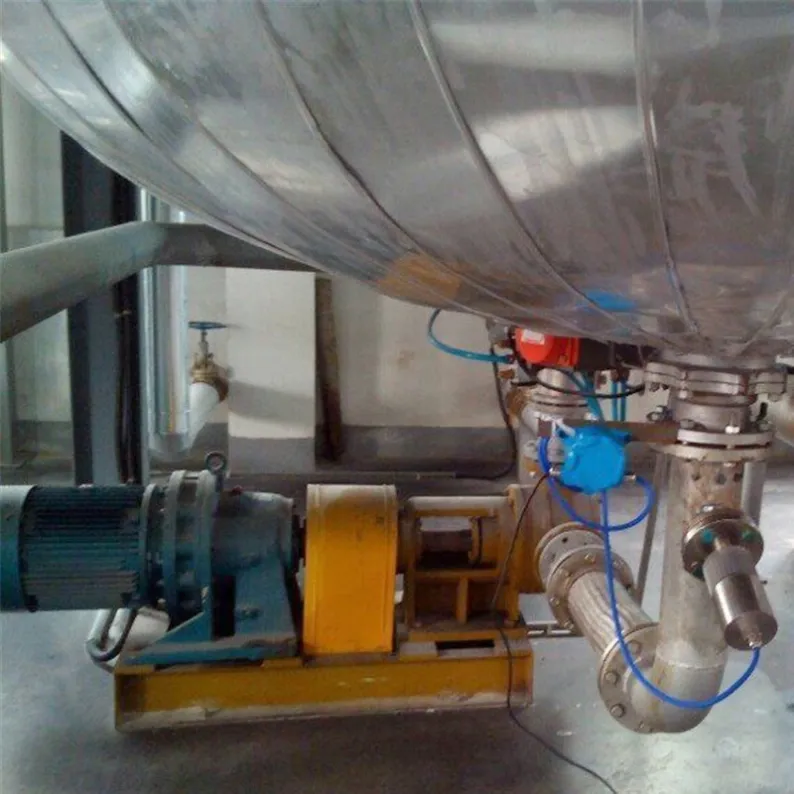
The sensing point should represent the fluid condition relevant to the control decision. Review pipe size, flow regime, mixing, residence time, temperature gradients, bubbles, solids and buildup.
Place the instrument where it can be installed, cleaned and inspected without creating an unrepresentative dead zone. Consider delay between measurement and the point where an adjustment affects the process.
Establish a reference and correlation
Define how the in-line result will be compared with an approved laboratory or quality method. Record sampling time, location, temperature and method. Use representative production data to establish a correlation or control limit.
A mathematical model should be treated as application-specific. Document its inputs, valid range and revision, and review it after process or formulation changes.
Integrate the control loop
Confirm the output, scaling, update rate, filtering and failure behavior. Define which variable will be adjusted and set safe limits for the control action. Manual review may be appropriate before enabling closed-loop control.
Avoid aggressive control based on noisy or delayed data. Test the response under controlled conditions and retain a way to place the loop in manual or safe state.
Commissioning and verification
Verify model, installation, units, temperature input, output and control-system scaling. Compare initial in-line readings with the reference method across representative conditions.
Record configuration, correlation, control settings and accepted operating range. Monitor buildup, process changes and reference results during use.
Maintenance
Inspection depends on the sensing principle, fluid and cleaning process. A design without rotating parts may avoid some mechanical components, but the sensing surface can still require cleaning and verification.
Establish inspection and correlation checks according to process criticality. A stable reading does not prove that the sensing element is clean or the correlation remains valid.
Practical questions
Can in-line viscosity replace every laboratory test?
Not automatically. It may support process monitoring, but release or quality requirements may still require an approved laboratory method.
Does viscosity control always reduce energy use?
No. The result depends on the process, control action and baseline. Any efficiency claim requires site data.
How should temperature be handled?
Measure or otherwise account for representative process temperature and define whether the control uses actual or normalized viscosity. Validate any compensation model.
What happens when formulation changes?
Review the reference correlation, control limits and instrument suitability. Do not assume an old model remains valid.
Next step
Provide the fluid, viscosity and temperature ranges, process connection, flow, reference method, cleaning and intended control action. HRT can review available configurations and integration questions; final performance must be validated in the process.
Application review checklist
- Fluid behavior, viscosity range and process-temperature range.
- Flow conditions, process connection, installation orientation and cleaning method.
- Required output, control objective and reference or verification method.
Contact our technical team with the operating conditions, installation details and required interface to request an application and configuration review.
-