
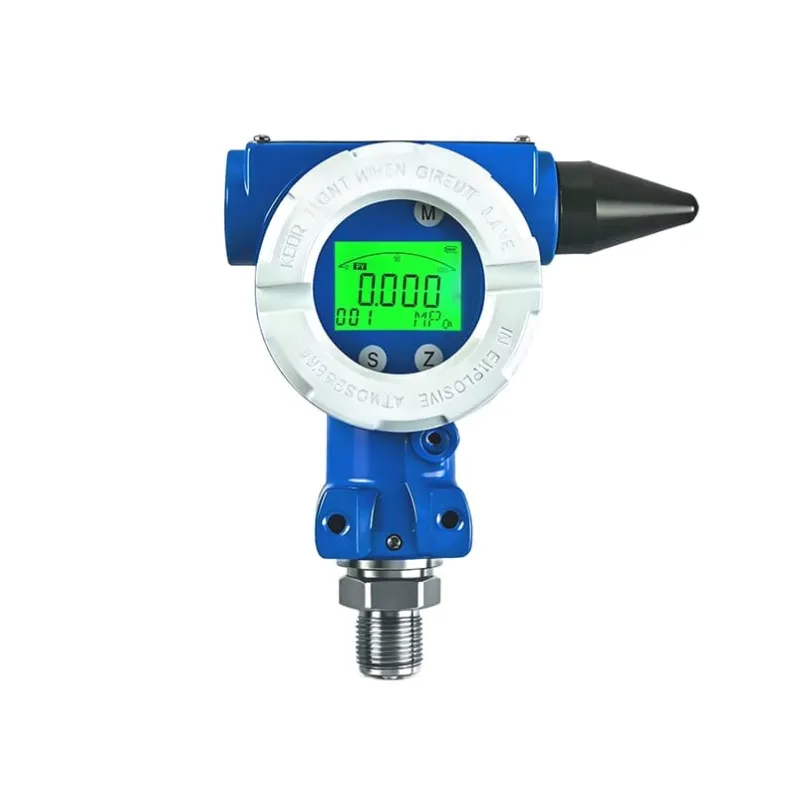
Smart & Wireless Pressure Transmitters
HRT-P51W Wireless Pressure Transmitter | 4G & NB-IoT IIoT Pressure Monitoring
Wireless pressure transmitter with 4G or NB communication for remote pressure monitoring, with local display, configurable reporting interval and battery or external power options.
Specifications
- Measuring Range
- 0–60 MPa; selected ranges available
- Accuracy
- ±0.5% FS standard
- Pressure Reference
- Gauge; selected absolute ranges available
- Output
- 4G / NB wireless communication
- Wetted Material
- 304 stainless-steel pressure interface
- Process Connection
- M20 × 1.5 standard; G1/2 or 1/2 NPT options
- Electrical Connection
- Wireless communication; 24 VDC external-power option
- Ingress Protection
- IP66
Product Overview
HRT-P51W combines pressure measurement, local display and low-power cellular communication in one field instrument. It is intended for remote pressure points where running signal cable is inconvenient and measured data needs to be reported to a remote system.
Applications
Typical uses include water networks, remote pump stations, oilfield surface pressure points, gas pipelines, utility systems and other distributed pressure-monitoring locations.
Selection & Application
Confirm the pressure range, pressure reference, medium, reporting interval, network type, power method and process connection. Network coverage at the installation site should also be checked.
Installation & Integration
Before installation, confirm the process thread and close the process valve. The transmitter can be mounted directly or through a union/adaptor where orientation adjustment is required. After installation, reopen the valve and check that the pressure connection is leak-free.
Configuration Options
Reporting interval, communication network, pressure range and connection can be selected according to the project. Platform or application integration should be confirmed separately.
Next Step
For selection or quotation, please send the medium, pressure range, reporting interval, network type, process connection and power preference.